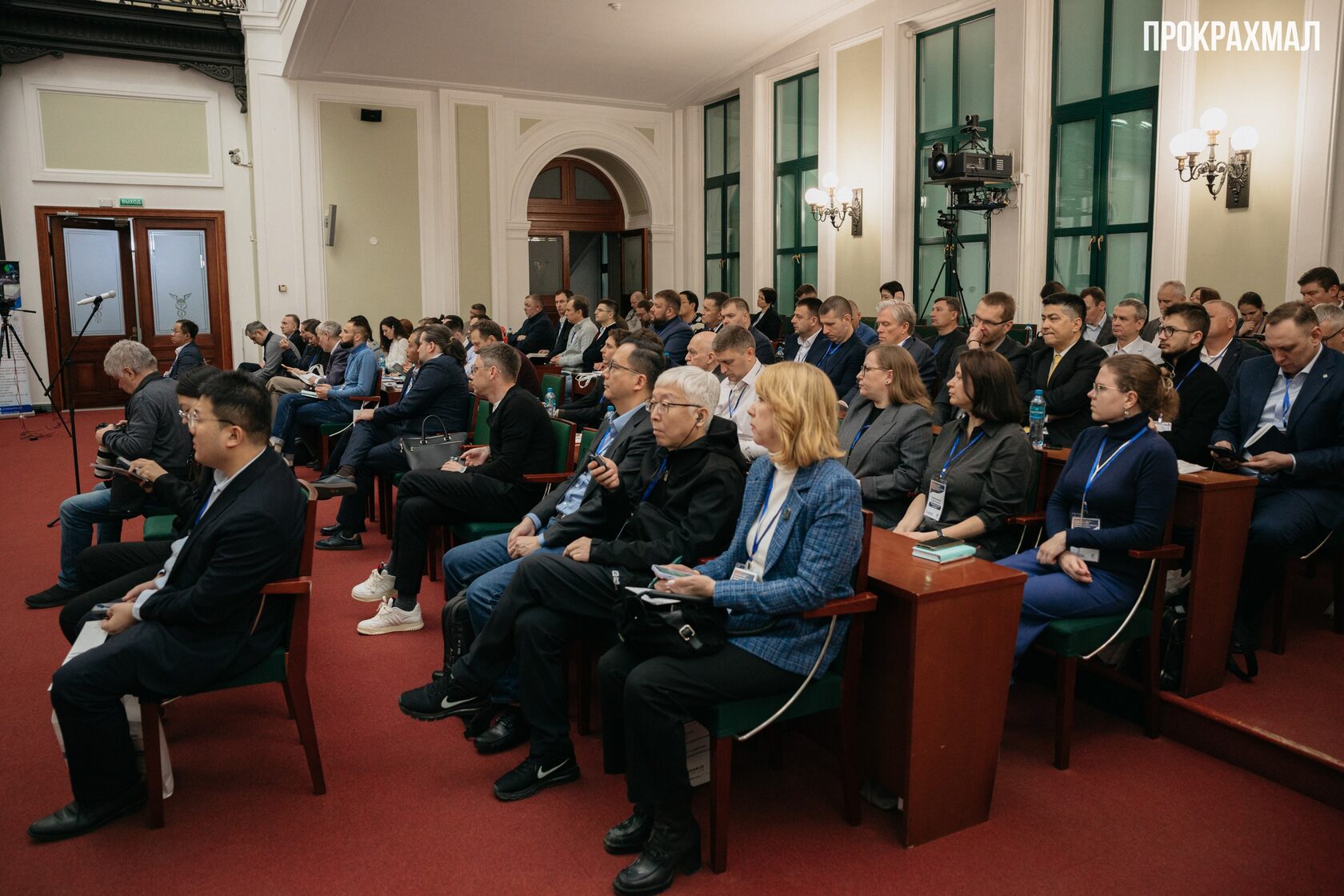
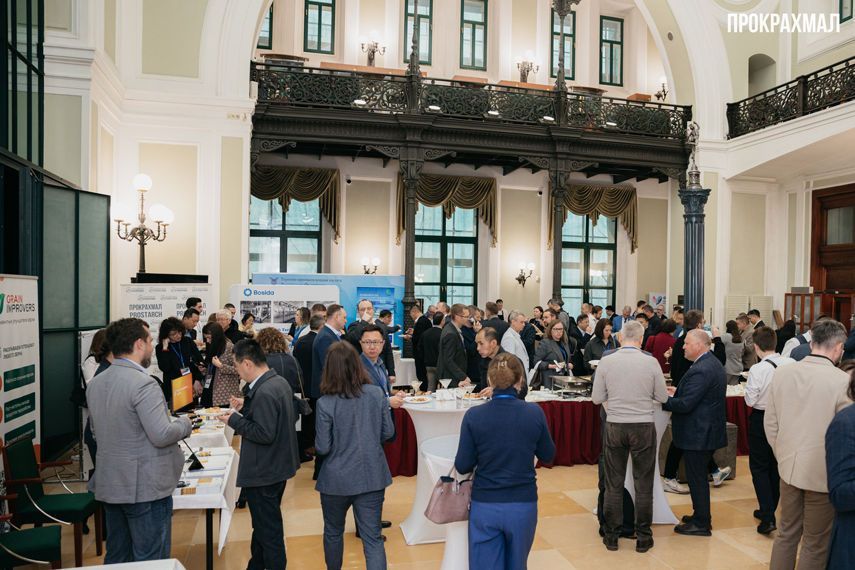
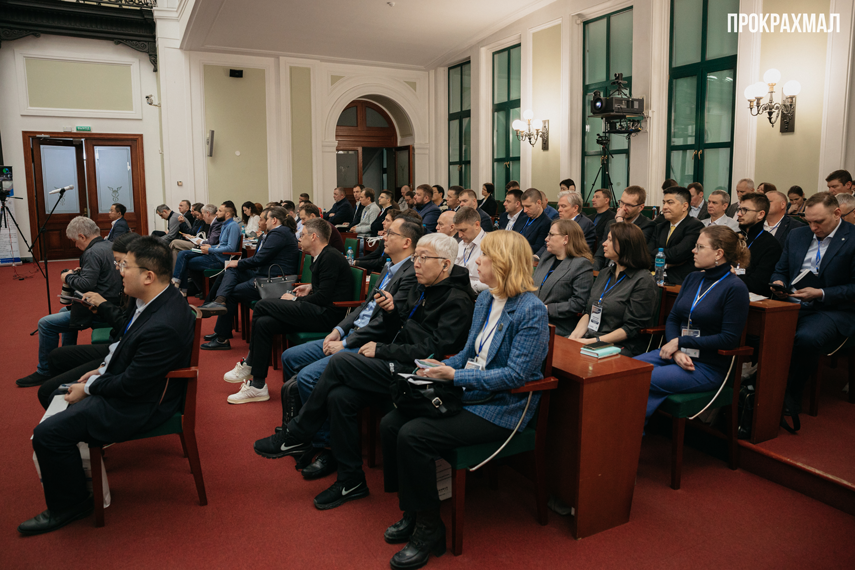
On April 8, 2025, the conference "ProStarch 2025: deep grain processing market trends" was held in Moscow, organized by the Association of value-added grain processing companies. The event was attended by 140 participants — representatives of 70 companies from Russia, China, Turkey, Kazakhstan, Kyrgyzstan, and other countries.
20 experts and 10 exhibitors gathered at the industry community platform. Among the participants were heads of the largest grain and potato processing plants, potential investors, representatives of industry associations – consumers of deep processing products, analytical agencies, and the scientific community of the deep grain processing industry. The event was supported by more than 40 information partners.
20 experts and 10 exhibitors gathered at the industry community platform. Among the participants were heads of the largest grain and potato processing plants, potential investors, representatives of industry associations – consumers of deep processing products, analytical agencies, and the scientific community of the deep grain processing industry. The event was supported by more than 40 information partners.
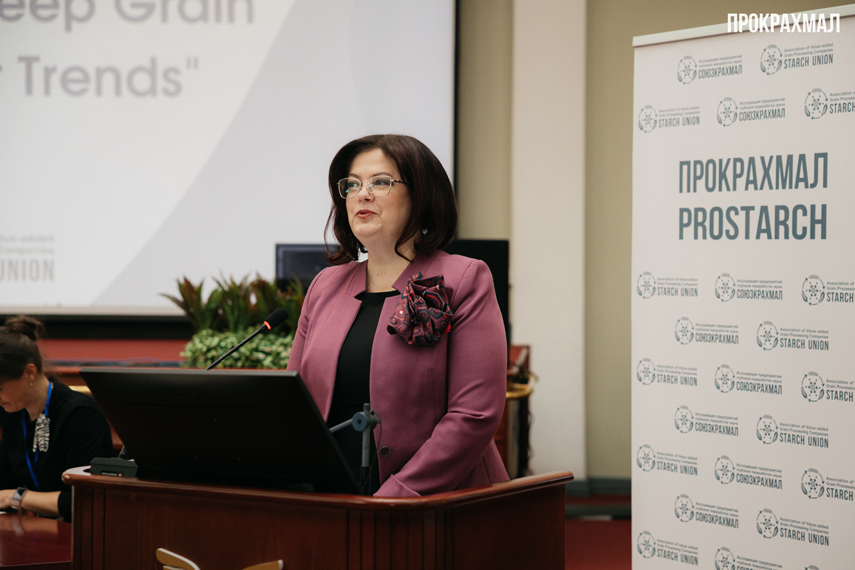
A welcoming speech was delivered by Dybova Elena Nikolaevna, Vice-President of the Chamber of Commerce and Industry of the Russian Federation. She noted the significance of the CCI RF's participation in resolving pressing issues and challenges facing businesses, as historically, the platform has been a place for those who form the basis of Russia's economic development. It is important for businesses to always have points of contact with state structures, especially in today's difficult economic situation. The deep grain processing industry is high-tech and profitable, but it also faces serious issues that require solutions, which is why events like the ProStarch conference are particularly necessary. “I wish you productive work, faith, and optimism — for business, this is the most important thing today”, — Elena Nikolaevna concluded her speech.
Kashin Vladimir Ivanovich, Chairman of the Committee on Agrarian Issues and State Duma Deputy, sent greetings to the participants of the conference "ProStarch 2025: deep grain processing market trends". "Today's agenda includes the demands of a new era related to ensuring the food independence of the state and developing solutions to improve product quality and safety amidst global challenges. Modern challenges require us not only to preserve achieved results but also to actively implement the achievements of agricultural science, new production technologies, modernization of production processes, and to provide the agro-industrial complex with qualified specialists." — wrote Vladimir Ivanovich.
Kashin Vladimir Ivanovich, Chairman of the Committee on Agrarian Issues and State Duma Deputy, sent greetings to the participants of the conference "ProStarch 2025: deep grain processing market trends". "Today's agenda includes the demands of a new era related to ensuring the food independence of the state and developing solutions to improve product quality and safety amidst global challenges. Modern challenges require us not only to preserve achieved results but also to actively implement the achievements of agricultural science, new production technologies, modernization of production processes, and to provide the agro-industrial complex with qualified specialists." — wrote Vladimir Ivanovich.
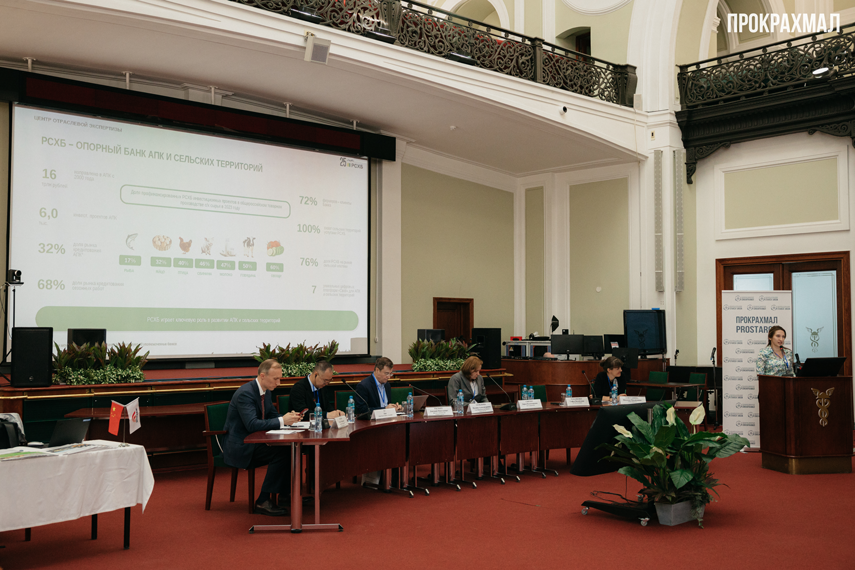
The conference consisted of four sessions and a workshop for technologists. The first session, "PRO Analytics: Agrotreds and their impact on the deep grain processing market". Li Jian, Director of Participant Support, Technology, and Information at the China Starch Industry Association, spoke about the current situation and development trends in the starch and derivatives industry in China. Li Jian, Director of Participant Support, Technology and Information Services, China Starch Industry Association. Today, high technologies and artificial intelligence are actively developing in China. Over the past 20 years, production volumes have increased 20-fold. The uses of starch are wide: from the food industry and sweeteners, to alcoholic beverages, organic acids, paper production, pharmaceuticals. Citric acid is also an important component in household products – all this indicates the high potential of the industry. The total volume of starch production in China is about 48.75 million tons.
Daria Vladimirovna Snitko, Vice President, Head of the Analytical Department of Gazprombank, spoke about the prospects and risks of the Russian agro-industrial complex in 2025: Snitko Daria Vladimirovna. She highlighted the main problems facing the industry. Among them are a shortage of personnel at enterprises, despite a positive trend of increasing wages in 2020-2024, and strict monetary conditions. In the 2025/2026 season, the harvest will be somewhat higher than the previous year, but in the structure of areas under grain, wheat continues to lose ground. Tariff changes between the US and China, which will affect soybeans, corn, wheat, broiler meat, and many other items, create opportunities for Russian exporters.
Rylko Dmitry Nikolaevich, CEO of the Institute for Agricultural Market Studies (IKAR), spoke about the Russian grain market and its development potential: Rylko Dmitry Nikolaevich, General Director of the Institute for Agricultural Market Studies (IKAR): “Against the backdrop of a “compact” harvest, record wheat exports were observed in the first half of the season, and the export potential for barley and corn was almost exhausted. This was due to the expectation of an export quota, the effect of variable duties combined with high deposit interest rates, making it relatively profitable to sell grain quickly. At the same time, the expectations of many market participants that we would see a price rally in the second half of the season are not being met — the situation on the world market remains quite calm, and the domestic market is protected by export duties and quotas. Estimates for the new harvest have gradually improved in recent weeks, although significant risks and uncertainties remain.”.
Smetanina Natalia Mikhailovna, Strategic Marketing Manager at Cargill presented an analysis of the deep grain processing industry in Russia for 2024 and forecasts for 2025. For the past 6 years, the production of all types of starch has been steadily growing: a 2-fold increase in modified starches and a 40% increase in native starches. Production of native starches is expected to grow by 3%, and modified starches by 18%. In the 2025 agricultural year, demand for glucose from amino acid producers and confectioners, as well as confectionery fructose, is projected to increase. The average annual capacity utilization for starch production is approaching 90%, and for molasses, 95%.
Romashchenko Sofia Mikhailovna, Managing Director of the Center for Industry Expertise at JSC "Rosselkhozbank" noted: "The grain processing market is a crucial component of the value-added chain and food supply, effectively connecting producers and consumers. The global deep grain processing market is projected to grow from $450 billion in 2024 to $600 billion in 2033 (CAGR 5% of the global market). The speaker expressed hopes for an increase in the profitability of the deep grain processing industry due to the launch of two new national projects: "Technological Provision of Food Security" and "Bioeconomy". “We hope that the growth rate of deep grain processing will be 10% annually”, she said.
Daria Vladimirovna Snitko, Vice President, Head of the Analytical Department of Gazprombank, spoke about the prospects and risks of the Russian agro-industrial complex in 2025: Snitko Daria Vladimirovna. She highlighted the main problems facing the industry. Among them are a shortage of personnel at enterprises, despite a positive trend of increasing wages in 2020-2024, and strict monetary conditions. In the 2025/2026 season, the harvest will be somewhat higher than the previous year, but in the structure of areas under grain, wheat continues to lose ground. Tariff changes between the US and China, which will affect soybeans, corn, wheat, broiler meat, and many other items, create opportunities for Russian exporters.
Rylko Dmitry Nikolaevich, CEO of the Institute for Agricultural Market Studies (IKAR), spoke about the Russian grain market and its development potential: Rylko Dmitry Nikolaevich, General Director of the Institute for Agricultural Market Studies (IKAR): “Against the backdrop of a “compact” harvest, record wheat exports were observed in the first half of the season, and the export potential for barley and corn was almost exhausted. This was due to the expectation of an export quota, the effect of variable duties combined with high deposit interest rates, making it relatively profitable to sell grain quickly. At the same time, the expectations of many market participants that we would see a price rally in the second half of the season are not being met — the situation on the world market remains quite calm, and the domestic market is protected by export duties and quotas. Estimates for the new harvest have gradually improved in recent weeks, although significant risks and uncertainties remain.”.
Smetanina Natalia Mikhailovna, Strategic Marketing Manager at Cargill presented an analysis of the deep grain processing industry in Russia for 2024 and forecasts for 2025. For the past 6 years, the production of all types of starch has been steadily growing: a 2-fold increase in modified starches and a 40% increase in native starches. Production of native starches is expected to grow by 3%, and modified starches by 18%. In the 2025 agricultural year, demand for glucose from amino acid producers and confectioners, as well as confectionery fructose, is projected to increase. The average annual capacity utilization for starch production is approaching 90%, and for molasses, 95%.
Romashchenko Sofia Mikhailovna, Managing Director of the Center for Industry Expertise at JSC "Rosselkhozbank" noted: "The grain processing market is a crucial component of the value-added chain and food supply, effectively connecting producers and consumers. The global deep grain processing market is projected to grow from $450 billion in 2024 to $600 billion in 2033 (CAGR 5% of the global market). The speaker expressed hopes for an increase in the profitability of the deep grain processing industry due to the launch of two new national projects: "Technological Provision of Food Security" and "Bioeconomy". “We hope that the growth rate of deep grain processing will be 10% annually”, she said.
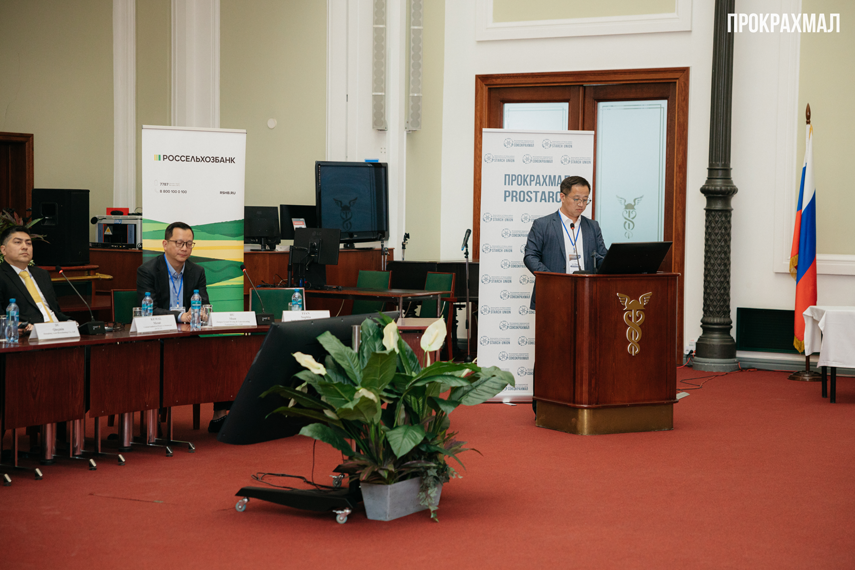
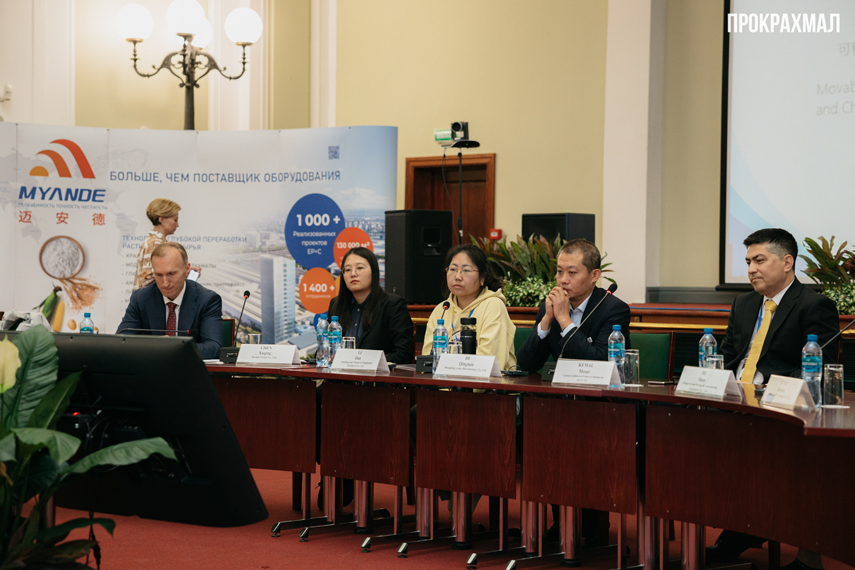
The conference sponsors were Myande Group Co., Ltd., Oushangyuan Process & Equipment Intelligent Co., Ltd., Shangdong Acme Biotechnology Co., Ltd., bank sponsor JSC "Rosselkhozbank", Çemsan Endüstriyel Proses ve Otomasyon san tic A.Ş; Jiangsu Grand Drying & Concentrating Equipment Co., Ltd., Bosida Starch Technology Co., Ltd., Grain Ingredient LLC, ZAVKOM-ENGINEERING LLC, Beijing MecKey Engineering Co., İmaş Makina Sanayi A.Ş.
The second session "PRO technologies: Engineering and biotechnological solutions in the field of deep processing of agricultural raw materials".
Li Dan, International Sales Director of Oushangyuan Process & Equipment Intelligent Co., Ltd. spoke about intelligent technologies to ensure cooperation between China and Russia in the modernization and innovation of the deep starch processing industry. Jiang Meng, Deputy General Director of Myande Group Co., Ltd., presented the company's best practices for implementing deep starch processing projects. Du Qingmin, General Director of Shangdong Acme Biotechnology Co., Ltd, prepared a presentation on dry corn processing technologies that support energy saving and environmental friendliness. It features a simple technological scheme and low capital costs, with no wastewater discharge.
Kemal Mesut, Business Development Director, Çemsan Endüstriyel Proses ve Otomasyon san tic A.Ş. spoke about the comprehensive customized solutions in design, production, and automation that the company implements, combining the latest developments in equipment and technological processes in the deep grain processing sector. Hu Shan, General Director of the International Business Department of Jiangsu Grand Drying & Concentrating Equipment Co., Ltd. presented a report: "Engineering of a deep grain processing enterprise. Solutions for energy-efficient drying and concentrating." Tian Sophia, Sales Manager of Bosida Starch Technology Co., Ltd. spoke about the company's technologies, demonstrating 106 completed projects for starch enterprises in various countries.
The second session "PRO technologies: Engineering and biotechnological solutions in the field of deep processing of agricultural raw materials".
Li Dan, International Sales Director of Oushangyuan Process & Equipment Intelligent Co., Ltd. spoke about intelligent technologies to ensure cooperation between China and Russia in the modernization and innovation of the deep starch processing industry. Jiang Meng, Deputy General Director of Myande Group Co., Ltd., presented the company's best practices for implementing deep starch processing projects. Du Qingmin, General Director of Shangdong Acme Biotechnology Co., Ltd, prepared a presentation on dry corn processing technologies that support energy saving and environmental friendliness. It features a simple technological scheme and low capital costs, with no wastewater discharge.
Kemal Mesut, Business Development Director, Çemsan Endüstriyel Proses ve Otomasyon san tic A.Ş. spoke about the comprehensive customized solutions in design, production, and automation that the company implements, combining the latest developments in equipment and technological processes in the deep grain processing sector. Hu Shan, General Director of the International Business Department of Jiangsu Grand Drying & Concentrating Equipment Co., Ltd. presented a report: "Engineering of a deep grain processing enterprise. Solutions for energy-efficient drying and concentrating." Tian Sophia, Sales Manager of Bosida Starch Technology Co., Ltd. spoke about the company's technologies, demonstrating 106 completed projects for starch enterprises in various countries.
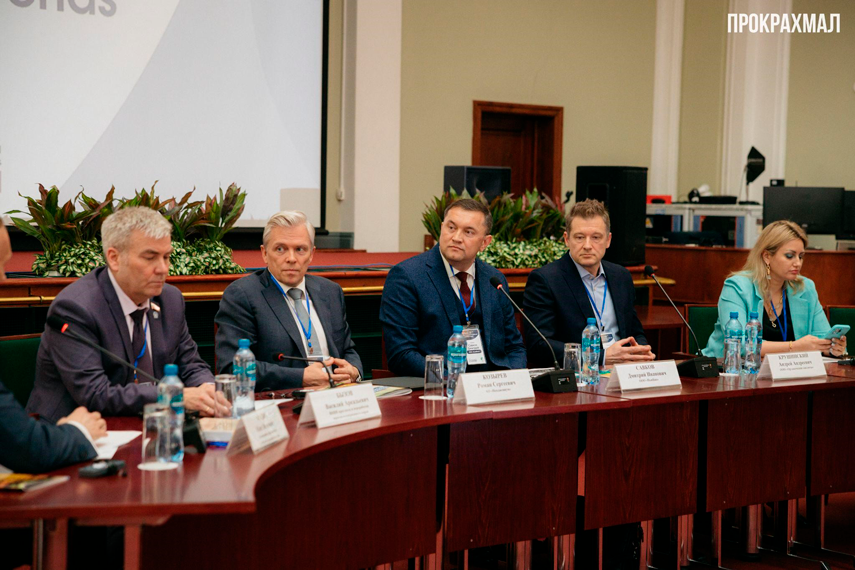
In the session PRO strategies: Dialogue with industry leaders – on the implementation of national projects, state support measures, ongoing projects, enterprise management the top executives of industry companies spoke: Savkov Dmitry Ivanovich, General Director of NewBio LLC, highlighted several aspects of solving complex technological problems in the implementation of industry projects: focusing on new technologies and innovations, where "difficulties are an incentive to create advanced solutions," forming effective teams with different experiences and visions, as well as strategic planning and using flexible methods to break down a complex task into several separate stages.
Kushinsky Andrey Andreevich, General Director of Organic Acids LLC, spoke about the "pitfalls" in preparing and implementing complex biotech startups, and also presented the development strategy of Organic Acids company, according to which the company's annual production capacity will reach 73 thousand tons by 2028, including 63 thousand tons of citric acid and 10 thousand tons of lactic acid. Thus, by 2028, the Russian Federation will fully import-substitute these two organic acids.
Byzov Vasiliy Arkadyevich, Director of the All-Russian Research Institute of Starch and Starch-Containing Raw Materials Processing, focused on the scientific development of the industry and presented innovative research in the field of deep processing of starch-containing and inulin-containing raw materials. “In order to expand the scope of application of starches in various industries, it is necessary to establish the production of starches with special properties that will differ from traditional starch obtained from new varieties, hybrids, and breeding lines of corn, wheat, peas, and potatoes” — noted Vasily Arkadyevich.
Kozyrev Roman Sergeyevich, Chairman of the Public Expert Council on the National Project for Technological Leadership “Technological Support for Bioeconomy”, General Director of JSC “Neogenium”, spoke about the prospects for industry development in the context of national projects. “Starting this year, the situation will once again become favorable for the development of the deep grain processing industry and industrial biotechnologies,” he said. This is due to a large number of federal projects supporting bioeconomy sectors. The main challenges may include choosing a strategy for existing and new industry players, the availability of competencies of initiators and project development teams, the balance of projects in terms of production programs, and the sufficiency of own and borrowed investment capital. Despite the high key rate, thanks to state support, there is an opportunity and a need to build new production facilities, and this process has been launched. All efforts will ultimately lead to the development of domestic and export markets, an increase in competencies and the level of personnel training, and the revival of industrial biotech in Russia.
Kushinsky Andrey Andreevich, General Director of Organic Acids LLC, spoke about the "pitfalls" in preparing and implementing complex biotech startups, and also presented the development strategy of Organic Acids company, according to which the company's annual production capacity will reach 73 thousand tons by 2028, including 63 thousand tons of citric acid and 10 thousand tons of lactic acid. Thus, by 2028, the Russian Federation will fully import-substitute these two organic acids.
Byzov Vasiliy Arkadyevich, Director of the All-Russian Research Institute of Starch and Starch-Containing Raw Materials Processing, focused on the scientific development of the industry and presented innovative research in the field of deep processing of starch-containing and inulin-containing raw materials. “In order to expand the scope of application of starches in various industries, it is necessary to establish the production of starches with special properties that will differ from traditional starch obtained from new varieties, hybrids, and breeding lines of corn, wheat, peas, and potatoes” — noted Vasily Arkadyevich.
Kozyrev Roman Sergeyevich, Chairman of the Public Expert Council on the National Project for Technological Leadership “Technological Support for Bioeconomy”, General Director of JSC “Neogenium”, spoke about the prospects for industry development in the context of national projects. “Starting this year, the situation will once again become favorable for the development of the deep grain processing industry and industrial biotechnologies,” he said. This is due to a large number of federal projects supporting bioeconomy sectors. The main challenges may include choosing a strategy for existing and new industry players, the availability of competencies of initiators and project development teams, the balance of projects in terms of production programs, and the sufficiency of own and borrowed investment capital. Despite the high key rate, thanks to state support, there is an opportunity and a need to build new production facilities, and this process has been launched. All efforts will ultimately lead to the development of domestic and export markets, an increase in competencies and the level of personnel training, and the revival of industrial biotech in Russia.
The conference concluded with the session «PRO Consumers: Consumer Preferences: Development Vectors for Consumer Industries – Results 2024 / Prospects 2025». The development of the dairy industry and the use of starch products as ingredients for dairy production were discussed by Gruzdev Alexey Viktorovich, General Director of Streda Consulting. Maltodextrin is most in demand in the baby food industry, whose production is growing by 12% per year and reached 50 thousand tons in 2023 amid the implementation of a number of large investment projects. Food starches are used as a component of stabilization systems in dairy products with fruit fillings (ice cream, yogurts, cottage cheese, and desserts), in processed and curd cheeses, as well as in products with milk fat substitutes.
Budazhapova Maya Zhalsanovna, Head of Technical Regulation and Standardization at SOYUZNAPITKI, spoke about the stable demand for starch products in beverage production, despite trends of declining sugar consumption and partial reformulation of recipes. The most popular starch product in non-alcoholic beverages is maltodextrin. Erythritol was specifically noted, which from 2024 is permitted for use in the production of non-alcoholic beverages, which may lead to an increase in demand for this sweetener. The beverage industry, as a producer of ready-to-drink products, urges careful attention to the identification of starch processed products indicated on consumer packaging labels. Thus, from April 1, 2025, a new GOST R 71910-2024 has been introduced, which establishes terminology, including in the field of carbohydrate products of deep grain processing, and which can be applied when forming names in accordance with the requirements of the technical regulation.
A report on global trends in the amino acid industry and prospects for Russia within national projects was presented by Savkina Liubov Anatolyevna — founder of the agency "SAVKINA EXPERT GROUP". Of the four amino acids presented in the report, threonine predominates, accounting for over 60%, tryptophan for 17%, arginine for 12%, and isoleucine for 9%. 75% of tryptophan is used in the feed industry, 7% in food, and 5% in pharmaceuticals, but its share is projected to grow to 8% in the food industry and pharmaceuticals. In Russia, the market should grow by 2-3% per year, provided that consumers expand and domestic production is established. The arginine market in Russia is actively developing, with positive dynamics expected, however, the capacity of the Russian arginine market in the world is 2.5-3.0%. The share of the Russian isoleucine market in the world is 3.3% in physical terms and 6.3% in monetary terms.
Budazhapova Maya Zhalsanovna, Head of Technical Regulation and Standardization at SOYUZNAPITKI, spoke about the stable demand for starch products in beverage production, despite trends of declining sugar consumption and partial reformulation of recipes. The most popular starch product in non-alcoholic beverages is maltodextrin. Erythritol was specifically noted, which from 2024 is permitted for use in the production of non-alcoholic beverages, which may lead to an increase in demand for this sweetener. The beverage industry, as a producer of ready-to-drink products, urges careful attention to the identification of starch processed products indicated on consumer packaging labels. Thus, from April 1, 2025, a new GOST R 71910-2024 has been introduced, which establishes terminology, including in the field of carbohydrate products of deep grain processing, and which can be applied when forming names in accordance with the requirements of the technical regulation.
A report on global trends in the amino acid industry and prospects for Russia within national projects was presented by Savkina Liubov Anatolyevna — founder of the agency "SAVKINA EXPERT GROUP". Of the four amino acids presented in the report, threonine predominates, accounting for over 60%, tryptophan for 17%, arginine for 12%, and isoleucine for 9%. 75% of tryptophan is used in the feed industry, 7% in food, and 5% in pharmaceuticals, but its share is projected to grow to 8% in the food industry and pharmaceuticals. In Russia, the market should grow by 2-3% per year, provided that consumers expand and domestic production is established. The arginine market in Russia is actively developing, with positive dynamics expected, however, the capacity of the Russian arginine market in the world is 2.5-3.0%. The share of the Russian isoleucine market in the world is 3.3% in physical terms and 6.3% in monetary terms.
“The ProStarch conference has established itself as a leading expert platform for discussing the latest trends, innovations, and technologies in the industry. Next year, we will hold the 10 International Conference, which we will try to make even more extensive and eventful. We invite companies to become part of this unique event and contribute to the future of the industry.” — concluded the event Radin Oleg Igorevich, president of the StarchUnion Association.
Conference video: pr@starchunion.com +7(961)527-64-12 Daria Vasilenko
About StarchUnion Association: The Association of value-added grain processing companies is a professional non-profit organization that promotes the strengthening and development of the domestic deep grain processing market. The StarchUnion Association was founded in 1998 and currently unites the largest enterprises in the industry, providing about 80% of native starch, over 75% of the domestic production volume of native starch, maltodextrin and glucose-fructose syrups, 90% of modified starches, and 100% of glucose syrups and L-lysine sulfate.